Lufthansa is to relaunch internet onboard long haul flights from January. It is to start on routes to New York and Detroit and will offer high speed access for anyone with a laptop with wifi capability and smartphones.
It will be followed up with the ability to use phones for SMS and MMS messages, but Lufthansa is not to allow phone calls, which will be a blessed relief to those who treat time in the sky as time to relax.
It will be free until the end of January 2011, after when there will be charges presumably (although one might expect it will remain free for First Class at least).
However this should kickoff a flurry of interest in internet access on long haul flights, although I am far from enthused about the idea of SMS/MMS appearing on flights with endless beeps and tones from the inane who can't get the idea that if you are holding your phone, you don't need to hear when a message is received!
Saturday, December 04, 2010


BMI upgrades mid haul seating in business and economy classes
Business Traveller reports on BMI's upgrade of its mid haul business class cabin. It applies to Airbus A321 and Airbus A320 aircraft used on routes between London Heathrow and:
- Addis Ababa via Amman
- Almaty
- Baku
- Khartoum via Beirut
- Cairo
- Damascus
- Dammam
- Freetown via Malaga
- Jeddah
- Moscow
- Tbilisi
- Tehran
- Tripoli
- Yerevan
 It shows photos of the new seating here. It is basically a very nice refresh of a rather tired cabin. Whilst BMI continues to not be profitable for its owner - Lufthansa - it is not surprising, but BMI does not exactly have a world class product for many of these routes. The main advantage BMI has on most routes is that it is the only Western carrier, but on a few routes (e.g. Cairo) it isn't up with the competition as recliners without in seat power aren't exactly what passes as standard for what are in some cases long haul overnight flights!
Business Traveller reviewed the updated Business Class on the London-Beirut route.
Austrian Airlines upgrades short haul economy and business classes
Business Traveller reports that Austrian Airlines is launching upgrades to its European services.
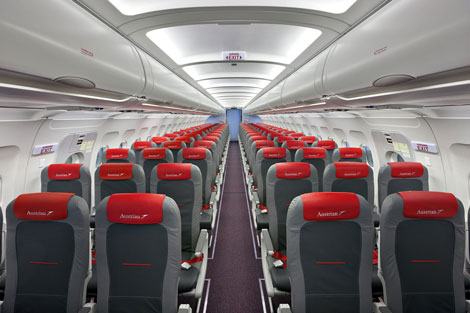 |
| Austrian new short haul economy class seats |
By September 2011 new seats will be installed in economy and business class in all Airbus A320s and Boeing 737s. Whilst at the same pitch as existing seats, Austrian claims the new seats will offer up to 5cm of additional knee and legroom, whilst also allowing effectively an additional row to be installed on the aircraft.
Austrian is already publicising the seat with this video which shows how the seat pocket is now behind the tray table, and the seat is made of more breathable fabric.
Of course as European Business Class includes the same seats with the middle seats blanked out, it applies for both cabins.
Particularly interesting is catering. Austrian Economy Class in Europe is having improved catering:
"In practice this means that on flights lasting more than two hours, the carrier will offer an Austrian Brettljause or a “paper bag filled with warm delicacies”. The afternoon snack will feature a range of very Austrian options in future, including a miniature Gugelhupf cake."
Business class will consistently have hot meal service on all routes, except the shortest distance flights.
Good on Austrian, pushing itself as a quality full service carrier on European internal flights.
Monday, November 15, 2010
Premium Economy for Turkish Airlines
Some years after economy plus/premium economy classes started appearing, they have grown in popularity as business class is increasingly led by airlines with fully lie flat seats. Premium economy is seen on both BA and Virgin Atlantic, SAS, Air France, JAL, ANA, Qantas and Air NZ, with United's famous Economy Plus product being economy with more legroom. Cathay Pacific has been openly discussing whether a premium economy product would be warranted, and now according to ABTN, Turkish Airlines is introducing a premium economy class on a number of long haul routes. It would appear likely that it will be seen on its new Boeing 777 and Airbus A330 aircraft. Business traveller has depictions of the cabin (and other revamped cabins) showing an apparent 2-3-2 configuration (although this would appear to be on an A330, the following economy class picture must be on a 777 with 3-3-3).
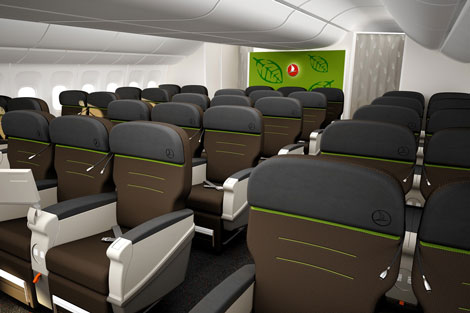 |
| Turkish Airlines new premium economy |
The appearance of this is welcome, as it adds to Star Alliance premium economy offerings, which in Europe are rare since BMI has abandoned the class, with only SAS providing an offering on long haul routes. It looks similar to the seating now provided by Virgin Atlantic in premium economy. Turkish has a range of competitors, from Lufthansa to the Middle East hub carriers, most of which have no such product. As an increasing number of better off leisure travellers are preferring to avoid being crammed like sardines in economy, those airlines without premium economy may be completely ignored by them. Turkish looks like it is trying to capture a share of the market.
Sunday, November 07, 2010
First Class - Star Alliance
Star Alliance carriers with first class products are conveniently listed in this post on Flyertalk. Why is this interesting? For starters, many Star Alliance carriers are part of the Star Alliance upgrade scheme, which allows frequent flyer points to be used to upgrade on any other participating Star Alliance carrier. However, the most important reason to care is that some actually do want something more than business class.
It doesn't matter whether the carrier of your Star Alliance frequent flyer scheme has first class, you can still upgrade with points from business to first class on another carrier.
The participating carriers for Star Alliance upgrades are:
- Air China
- Air New Zealand
- ANA
- Asiana
- Austrian
- Brussels
- Continental
- LOT
- Lufthansa
- SAS
- Singapore Airlines
- Swiss
- TAP
- Thai
- United
However, what carriers have first class and what are they like? I am deliberately largely ignoring domestic first class in the US in this mix, as it is effectively pitched at where short haul business class is within Asia and Europe.
Air China has first class on all of its Boeing 747s, all of its Airbus A340s, its medium haul Boeing 767s and 777s, and all of its Airbus A319s, A320s, A321s and Boeing 737s and 757s. It's latest long haul first class product is called Forbidden Pavilion First Class and looks remarkably like United new long haul first class seats. Fully lie flat pods. There is AVOD, exclusive catering and free limousine transfers at Shanghai and Beijing. Beijing and Shanghai have dedicated First Class lounges.
The routes for the new product are:
Beijing to JFK, LAX, San Francisco, Vancouver, Frankfurt, Munich, London Heathrow, Paris CDG, Athens, Rome and Madrid.
Shanghai Pudong to Frankfurt, Paris CDG and Milan.
Short and medium haul first class is also available, primarily on domestic Chinese routes and some medium haul routes around Asia.
Verdict? Air China's new long haul hard product is world class, but soft product doesn't have the finesse of some others. Short and medium haul first class is simply better than economy.
ANA (All Nippon Airways) has first class only on long haul flights operated by Boeing 747-400s and Boeing 777-200ERs and Boeing 777-300ERs. The routes operated with first class are between Tokyo Narita and:
- Chicago, Los Angeles, San Francisco and New York JFK ;
- London Heathrow, Paris and Frankfurt.
ANA's long haul first class is widely regarded as exemplary, with fully lie flat beds and the latest incarnation on the Boeing 777-300ERs being private sleeper suites with sliding doors. It has a dedicated first class lounge at Narita and arrivals lounge as well. ANA's soft product is considered exceptional and is up there with the best. As the launch airline for the Boeing 787 it will be interesting to see if any of those aircraft get first class.
Verdict? You'll be hard pressed to find a better first class on the routes ANA operates.
Asiana has first class on all of its Boeing 747s and some long haul Boeing 777s. Lounge access is shared with business class.
The confirmed routes with first class are between Seoul and:
The confirmed routes with first class are between Seoul and:
- Los Angeles and New York JFK
- Tokyo and
- Frankfurt
However, some of the aircraft may operate medium haul services in Asia with first class sold as business class with preference given to top tier Asiana frequent flyers.
Asiana's long haul first class product is highly competitive, with fully lie flat pods, and a reputation for excellent soft product. However, it is rolling out a new fully flat bed business class, so it will be interesting to see if it can retain first class on long haul. It is notable that routes such as London and Paris do not have first class.
Verdict? Asiana's long haul first class is right up to standard, with a soft product to match. Shame about the lack of routes.
Continental Airlines (now merged with United but still with separate branding, products and flight codes) has a US domestic first class product on all of its Boeing 737s and its Boeing 757-300 fleet. Consider the seating to be akin to a good long haul premium economy class, and the soft product service likewise. Continental's domestic first class provides access to the President's Club lounges, which are akin to business class lounges. Continental has no international first class product.
Egyptair has first class seating on its Airbus A340 and Boeing 777-200ER fleet. However, the A340 fleet is being replaced with new A330s that do not have first class, and the 777-200ER fleet is being reportedly reduced in scale. There are no dedicated First Class lounges. First Class passengers have access to business class lounges.
The routes with Egyptair first class are:
Cairo-Osaka
Cairo-Kuwait
Cairo-Jeddah
Cairo-Riyadh
Cairo-Bangkok
Cairo-Guangzhou
Cairo-Abu Dhabi
However, you should not get too excited about this. Egyptair first class hard product is not remotely close to world class, it is closer to business class of around 15 years ago. It consists of recliners in a 2-2-2 configuration. Soft product involves personalised attention and reasonable catering, but no alcohol. Consider Egyptair first class as an old fashioned business class product and you'll get the idea. As Egyptair is introducing a new business class on new A330s and 777-300ERs that surpasses this first class, you can see where first class is heading.
Verdict? If you can get Egyptair first class at prices below that of business class competitors, then it's a good deal, as you'll get excellent personalised service and good quality catering. However, this isn't even in the same league as business class on most other Star Alliance carriers, let alone first class.
Lufthansa
Lufthansa has its new private fully lie flat first class seats on Airbus A380s, and its full reclining first class on all of its Boeing 747s, all Airbus A330s and some Airbus A340s. Lufthansa maintains first class on many long haul routes and has a dedicated First Class terminal at its main hub in Frankfurt. There are also dedicated First Class lounges at Frankfurt and Munich, and 30 Senator lounges accessible only by First Class and Star Alliance Gold customers (not business class). It has one of the most extensive first class route networks in the world.
Routes with first class are:
To Americas
Frankfurt-Atlanta
Frankfurt-Boston
Munich-Boston
Frankfurt-Buenos Aires
Munich-Charlotte
Frankfurt-Chicago
Munich-Chicago
Dusseldorf-Chicago
Frankfurt-Dallas
Frankfurt-Denver
Munich-Denver
Frankfurt-Detroit
Frankfurt-Houston
Frankfurt-Los Angeles
Munich-Los Angeles
Frankfurt-Mexico City
Frankfurt-Miami
Munich-Montreal
Frankfurt-New York JFK
Munich-New York JFK
Frankfurt-New York Newark
Dusseldorf-New York Newark
Frankfurt-Orlando
Frankfurt-Philadelphia
Frankfurt-San Francisco
Munich-San Francisco
Frankfurt-Sao Paulo
Munich-San Paulo
Frankfurt-Seattle
Dusseldorf-Toronto
Frankfurt-Vancouver
Frankfurt-Washington Dulles
To Africa
Frankfurt-Accra
Frankfurt-Cape Town
Frankfurt-Johannesburg
To Middle East
Frankfurt-Abu Dhabi
Frankfurt-Bahrain
Frankfurt-Dubai
Munich-Dubai
Frankfurt-Tel Aviv
Munich-Tel Aviv
To Asia
Frankfurt-Bangkok
Frankfurt-Beijing
Frankfurt-Chennai
Frankfurt-Delhi
Munich-Delhi
Frankfurt-Guangzhou
Frankfurt-Ho Chi Minh City
Frankfurt-Hong Kong
Frankfurt-Jakarta
Frankfurt-Kolkata
Frankfurt-Kuala Lumpur
Frankfurt-Mumbai
Frankfurt-Nagoya
Frankfurt-Nanking
Frankfurt-Osaka
Frankfurt-Seoul
Munich-Seoul
Frankfurt-Shanghai
Frankfurt-Singapore
Frankfurt-Tokyo Narita
Within Asia
Bangkok-Ho Chi Minh City
Bangkok-Kuala Lumpur
Singapore-Jakarta
Verdict? Lufthansa soft product is up there with the best including an unbeatable airside experience at Frankfurt. Hard product on the A380 is also up there, on other aircraft it is a bit dated, being recliner seats that simply recline all the way. Still it may be the only first class choice on many of these routes and a reasonable one at that.
Singapore Airlines
Singapore Airlines has effectively four types of first class product if you count the A380 "Suites" as akin to first class (although the airline says it is "beyond" first). The private suites with closing doors and dedicated beds (separate from the seating) are only on the Airbus A380. The "new" long haul first class involves 35 inch wide leather private seats that recline fully into flat beds with 23 inch LCD IFE screens, and are seen on Boeing 777-300ER aircraft and are now being retrofitted to some regional Boeing 777-300s. The other long haul first class involves 22 inch wide flat beds with 17 inch IFE screens and are on the remaining Boeing 747 aircraft. There is finally a regional first class with recliner sleeper seats for flights within Asia on some Boeing 777-200ER and Boeing 777-300 aircraft. What is impressive is the extent of the medium haul network with first class.
Singapore Airlines has one of the best soft products around, although the "ground" experience is good it isn't exceptional, although there are always dedicated First Class lounges.
Note not all services on these routes include first class, only those with aircraft listed above.
To Americas (via Asia or Europe)
Singapore-Moscow-Houston
Singapore-Tokyo-Los Angeles
Singapore-Frankfurt-New York JFK
Singapore-Hong Kong-San Francisco
Singapore-Seoul-San Francisco
To Europe
Singapore-Milan-Barcelona
Singapore-Frankfurt
Singapore-Dubai-Istanbul
Singapore-London Heathrow
Singapore-Milan
Singapore-Moscow
Singapore-Munich
Singapore-Munich-Manchester
Singapore-Paris
Singapore-Zurich
To Middle East
Singapore-Dubai
To Oceania
Singapore-Auckland
Singapore-Melbourne
Singapore-Sydney
Within Asia
Singapore-Bandar Seri Begawan
Singapore-Bangalore
Singapore-Bangkok
Singapore-Beijing
Singapore-Chennai
Singapore-Colombo
Singapore-Delhi
Singapore-Hong Kong
Singapore-Hyderabad
Singapore-Jakarta
Singapore-Lahore-Karachi
Singapore-Manila
Singapore-Mumbai
Singapore-Seoul
Singapore-Shanghai
Singapore-Taipei
Singapore-Tokyo
Verdict? The Suites are the best in the business, the rest aren't far behind. Almost certainly the best first class on any routes it operates. You'll struggle to get an upgrade on any of these, and not at all in Suites or the 777-300ER.
Swiss
Swiss has been making an effort to put first class on all of its long haul routes. It has first class on Airbus A340s and most Airbus A330s. The new first class being rolled out has semi-private suites with sliding doors. The existing first class still has fully lie flat beds which are as good as most others. Swiss soft product is impeccably good. There are dedicated first class lounges at Zurich and Geneva, with limo escort to the plane.
To Americas
Zurich-Boston
Zurich-Chicago
Zurich-Los Angeles
Zurich-Miami
Geneva-New York JFK
Zurich-New York JFK
Zurich-Sao Paulo
To Africa
Zurich-Johannesburg
Zurich-Nairobi-Dar es Salaam
To Asia
Zurich-Bangkok
Zurich-Delhi
Zurich-Hong Kong
Zurich-Mumbai
Zurich-Shanghai
Zurich-Tokyo
To Middle East
Zurich-Cairo
Zurich-Dubai-Muscat
Zurich-Jeddah
Zurich-Riyadh
Verdict? Swiss is one of the best. Smaller planes than the larger airlines, but excellent service and hard product that outdoes its owner - Lufthansa. Probably the best first class of any airline in Europe.
TAM
TAM is Brazil's largest airline and a recent joiner of Star Alliance. It has first class on its Airbus A330s and Boeing 777s. TAM has been making exceptional efforts to improve its product across the board. Its hard product has fully lie flat beds in semi-pods, perhaps now to the standard of the latest business class product on Swiss and ANA (which is among the best) and easily to a standard of United in first class.
Sao Paulo- Frankfurt
Sao Paulo- London Heathrow
Sao Paulo- Madrid
Sao Paulo- Miami
Rio de Janiero- New York JFK
Sao Paulo- New York JFK
Sao Paulo- Orlando
Rio de Janiero- Paris CDG
Sao Paulo- Paris CDG
Verdict? One of South America's best airlines, damned good product from the US and well worth considering on the other routes.
Thai Airways
Thai has first class on long haul aircraft only, being Boeing 747s, Airbus A340-600s and Boeing 777-300ERs. Royal First Class is on the A340s and some of the 747s, with fully lie flat bed pods. The other 747s have flat recliners, and 777s have private pods. Thai has a dedicate first class lounge at Bangkok with a spa, and some other lounges have first class sections.
To Europe
Bangkok-Frankfurt
Bangkok-London Heathrow
Bangkok-Rome-Madrid
Bangkok-Moscow
Bangkok-Munich
Bangkok-Paris
Bangkok-Zurich
To Middle East
Bangkok-Dubai
To Oceania
Bangkok-Brisbane
Bangkok-Sydney
To Asia
Bangkok-Beijing
Bangkok-Hong Kong
Bangkok-Shanghai
Bangkok-Tokyo
Verdict? Thai's soft product is good, hard product is up to standard, especially since the poorer quality recliners are not sold as first class on most routes they are operated on.
Turkish Airlines
Turkish only has first class on its new Boeing 777-300ER aircraft. The product has new private semi-cabins with fully lie flat beds, and high standard soft product compared to business class.
The only route with first class are:
Istanbul-Bangkok
Istanbul-Hong Kong
Istanbul-New York JFK
Istanbul-Tokyo Narita
Verdict? Worth a shot. Excellent hard product, soft product probably better up to a good business class.
United
As with Continental, United has first class on many domestic US flights. However, its international product comprises two types of suites, both feature pod like fully lie flat beds. The new product is on all Boeing 747s and Boeing 767s (and now being rolled out on 777s), the older one on international configuration Boeing 777s. Hard product is up to standard, soft product more like a good business class. United has dedicated International First Class lounges.
To Americas
Washington Dulles-Buenos Aires
Washington Dulles-Rio de Janiero
Washington Dulles-Sao Paulo
To Europe
Chicago- Amsterdam
Washington Dulles- Amsterdam
Washington Dulles-London Heathrow-Brussels
Chicago- Frankfurt
San Francisco- Frankfurt
Washington Dulles- Frankfurt
Washington Dulles- Geneva
Chicago-London Heathrow
Los Angeles-London Heathrow
San Francisco-London Heathrow
Washington Dulles- London Heathrow
Washington Dulles- Moscow DME
Chicago-Munich
Washington Dulles-Munich
Chicago- Paris CDG
San Francisco- Paris CDG
Washington Dulles - Paris CDG
Washington Dulles - Rome
Washington Dulles- Zurich
To Asia
Chicago- Bangkok
Honolulu- Bangkok
Los Angeles-Bangkok
San Francisco-Bangkok
Seattle- Bangkok
Chicago- Beijing
San Francisco-Beijing
Washington Dulles- Beijing
Chicago- Ho Chi Minh City
San Francisco-Ho Chi Minh City
Chicago- Hong Kong
Honolulu- Hong Kong
Los Angeles-Hong Kong
San Francisco-Hong Kong
Seattle- Hong Kong
San Francisco- Nagoya
Chicago- Osaka Kansei
Honolulu- Osaka Kansei
San Francisco- Osaka Kansei
Chicago- Seoul
Honolulu- Seoul
Los Angeles-Seoul
San Francisco- Seoul
Seattle- Seoul
Chicago- Shanghai
San Francisco- Shanghai
Chicago- Singapore
Honolulu- Singapore
San Francisco- Singapore
Seattle- Singapore
Chicago- Taipei
Honolulu- Taipei
Los Angeles-Taipei
San Francisco- Taipei
Seattle- Taipei
Chicago- Tokyo Narita
Honolulu- Tokyo Narita
Los Angeles- Tokyo Narita
San Francisco- Tokyo Narita
Seattle- Tokyo Narita
Washington Dulles- Tokyo Narita
Tokyo Narita-Seoul
Tokyo Narita-Singapore
Tokyo Narita-Taipei
To Middle East
Washington Dulles- Dubai
Washington Dulles- Kuwait
To Oceania
Los Angeles-Melbourne
San Francisco-Melbourne
Los Angeles- Sydney
San Francisco- Sydney
Verdict? United's long haul first is a reasonable product, but probably not the best first class on the routes it operates on.
Lufthansa
Lufthansa has its new private fully lie flat first class seats on Airbus A380s, and its full reclining first class on all of its Boeing 747s, all Airbus A330s and some Airbus A340s. Lufthansa maintains first class on many long haul routes and has a dedicated First Class terminal at its main hub in Frankfurt. There are also dedicated First Class lounges at Frankfurt and Munich, and 30 Senator lounges accessible only by First Class and Star Alliance Gold customers (not business class). It has one of the most extensive first class route networks in the world.
Routes with first class are:
To Americas
Frankfurt-Atlanta
Frankfurt-Boston
Munich-Boston
Frankfurt-Buenos Aires
Munich-Charlotte
Frankfurt-Chicago
Munich-Chicago
Dusseldorf-Chicago
Frankfurt-Dallas
Frankfurt-Denver
Munich-Denver
Frankfurt-Detroit
Frankfurt-Houston
Frankfurt-Los Angeles
Munich-Los Angeles
Frankfurt-Mexico City
Frankfurt-Miami
Munich-Montreal
Frankfurt-New York JFK
Munich-New York JFK
Frankfurt-New York Newark
Dusseldorf-New York Newark
Frankfurt-Orlando
Frankfurt-Philadelphia
Frankfurt-San Francisco
Munich-San Francisco
Frankfurt-Sao Paulo
Munich-San Paulo
Frankfurt-Seattle
Dusseldorf-Toronto
Frankfurt-Vancouver
Frankfurt-Washington Dulles
To Africa
Frankfurt-Accra
Frankfurt-Cape Town
Frankfurt-Johannesburg
To Middle East
Frankfurt-Abu Dhabi
Frankfurt-Bahrain
Frankfurt-Dubai
Munich-Dubai
Frankfurt-Tel Aviv
Munich-Tel Aviv
To Asia
Frankfurt-Bangkok
Frankfurt-Beijing
Frankfurt-Chennai
Frankfurt-Delhi
Munich-Delhi
Frankfurt-Guangzhou
Frankfurt-Ho Chi Minh City
Frankfurt-Hong Kong
Frankfurt-Jakarta
Frankfurt-Kolkata
Frankfurt-Kuala Lumpur
Frankfurt-Mumbai
Frankfurt-Nagoya
Frankfurt-Nanking
Frankfurt-Osaka
Frankfurt-Seoul
Munich-Seoul
Frankfurt-Shanghai
Frankfurt-Singapore
Frankfurt-Tokyo Narita
Within Asia
Bangkok-Ho Chi Minh City
Bangkok-Kuala Lumpur
Singapore-Jakarta
Verdict? Lufthansa soft product is up there with the best including an unbeatable airside experience at Frankfurt. Hard product on the A380 is also up there, on other aircraft it is a bit dated, being recliner seats that simply recline all the way. Still it may be the only first class choice on many of these routes and a reasonable one at that.
Singapore Airlines
Singapore Airlines has effectively four types of first class product if you count the A380 "Suites" as akin to first class (although the airline says it is "beyond" first). The private suites with closing doors and dedicated beds (separate from the seating) are only on the Airbus A380. The "new" long haul first class involves 35 inch wide leather private seats that recline fully into flat beds with 23 inch LCD IFE screens, and are seen on Boeing 777-300ER aircraft and are now being retrofitted to some regional Boeing 777-300s. The other long haul first class involves 22 inch wide flat beds with 17 inch IFE screens and are on the remaining Boeing 747 aircraft. There is finally a regional first class with recliner sleeper seats for flights within Asia on some Boeing 777-200ER and Boeing 777-300 aircraft. What is impressive is the extent of the medium haul network with first class.
Singapore Airlines has one of the best soft products around, although the "ground" experience is good it isn't exceptional, although there are always dedicated First Class lounges.
Note not all services on these routes include first class, only those with aircraft listed above.
To Americas (via Asia or Europe)
Singapore-Moscow-Houston
Singapore-Tokyo-Los Angeles
Singapore-Frankfurt-New York JFK
Singapore-Hong Kong-San Francisco
Singapore-Seoul-San Francisco
To Europe
Singapore-Milan-Barcelona
Singapore-Frankfurt
Singapore-Dubai-Istanbul
Singapore-London Heathrow
Singapore-Milan
Singapore-Moscow
Singapore-Munich
Singapore-Munich-Manchester
Singapore-Paris
Singapore-Zurich
To Middle East
Singapore-Dubai
To Oceania
Singapore-Auckland
Singapore-Melbourne
Singapore-Sydney
Within Asia
Singapore-Bandar Seri Begawan
Singapore-Bangalore
Singapore-Bangkok
Singapore-Beijing
Singapore-Chennai
Singapore-Colombo
Singapore-Delhi
Singapore-Hong Kong
Singapore-Hyderabad
Singapore-Jakarta
Singapore-Lahore-Karachi
Singapore-Manila
Singapore-Mumbai
Singapore-Seoul
Singapore-Shanghai
Singapore-Taipei
Singapore-Tokyo
Verdict? The Suites are the best in the business, the rest aren't far behind. Almost certainly the best first class on any routes it operates. You'll struggle to get an upgrade on any of these, and not at all in Suites or the 777-300ER.
Swiss
Swiss has been making an effort to put first class on all of its long haul routes. It has first class on Airbus A340s and most Airbus A330s. The new first class being rolled out has semi-private suites with sliding doors. The existing first class still has fully lie flat beds which are as good as most others. Swiss soft product is impeccably good. There are dedicated first class lounges at Zurich and Geneva, with limo escort to the plane.
To Americas
Zurich-Boston
Zurich-Chicago
Zurich-Los Angeles
Zurich-Miami
Geneva-New York JFK
Zurich-New York JFK
Zurich-Sao Paulo
To Africa
Zurich-Johannesburg
Zurich-Nairobi-Dar es Salaam
To Asia
Zurich-Bangkok
Zurich-Delhi
Zurich-Hong Kong
Zurich-Mumbai
Zurich-Shanghai
Zurich-Tokyo
To Middle East
Zurich-Cairo
Zurich-Dubai-Muscat
Zurich-Jeddah
Zurich-Riyadh
Verdict? Swiss is one of the best. Smaller planes than the larger airlines, but excellent service and hard product that outdoes its owner - Lufthansa. Probably the best first class of any airline in Europe.
TAM
TAM is Brazil's largest airline and a recent joiner of Star Alliance. It has first class on its Airbus A330s and Boeing 777s. TAM has been making exceptional efforts to improve its product across the board. Its hard product has fully lie flat beds in semi-pods, perhaps now to the standard of the latest business class product on Swiss and ANA (which is among the best) and easily to a standard of United in first class.
Sao Paulo- Frankfurt
Sao Paulo- London Heathrow
Sao Paulo- Madrid
Sao Paulo- Miami
Rio de Janiero- New York JFK
Sao Paulo- New York JFK
Sao Paulo- Orlando
Rio de Janiero- Paris CDG
Sao Paulo- Paris CDG
Verdict? One of South America's best airlines, damned good product from the US and well worth considering on the other routes.
Thai Airways
Thai has first class on long haul aircraft only, being Boeing 747s, Airbus A340-600s and Boeing 777-300ERs. Royal First Class is on the A340s and some of the 747s, with fully lie flat bed pods. The other 747s have flat recliners, and 777s have private pods. Thai has a dedicate first class lounge at Bangkok with a spa, and some other lounges have first class sections.
To Europe
Bangkok-Frankfurt
Bangkok-London Heathrow
Bangkok-Rome-Madrid
Bangkok-Moscow
Bangkok-Munich
Bangkok-Paris
Bangkok-Zurich
To Middle East
Bangkok-Dubai
To Oceania
Bangkok-Brisbane
Bangkok-Sydney
To Asia
Bangkok-Beijing
Bangkok-Hong Kong
Bangkok-Shanghai
Bangkok-Tokyo
Verdict? Thai's soft product is good, hard product is up to standard, especially since the poorer quality recliners are not sold as first class on most routes they are operated on.
Turkish Airlines
Turkish only has first class on its new Boeing 777-300ER aircraft. The product has new private semi-cabins with fully lie flat beds, and high standard soft product compared to business class.
The only route with first class are:
Istanbul-Bangkok
Istanbul-Hong Kong
Istanbul-New York JFK
Istanbul-Tokyo Narita
Verdict? Worth a shot. Excellent hard product, soft product probably better up to a good business class.
United
As with Continental, United has first class on many domestic US flights. However, its international product comprises two types of suites, both feature pod like fully lie flat beds. The new product is on all Boeing 747s and Boeing 767s (and now being rolled out on 777s), the older one on international configuration Boeing 777s. Hard product is up to standard, soft product more like a good business class. United has dedicated International First Class lounges.
To Americas
Washington Dulles-Buenos Aires
Washington Dulles-Rio de Janiero
Washington Dulles-Sao Paulo
To Europe
Chicago- Amsterdam
Washington Dulles- Amsterdam
Washington Dulles-London Heathrow-Brussels
Chicago- Frankfurt
San Francisco- Frankfurt
Washington Dulles- Frankfurt
Washington Dulles- Geneva
Chicago-London Heathrow
Los Angeles-London Heathrow
San Francisco-London Heathrow
Washington Dulles- London Heathrow
Washington Dulles- Moscow DME
Chicago-Munich
Washington Dulles-Munich
Chicago- Paris CDG
San Francisco- Paris CDG
Washington Dulles - Paris CDG
Washington Dulles - Rome
Washington Dulles- Zurich
To Asia
Chicago- Bangkok
Honolulu- Bangkok
Los Angeles-Bangkok
San Francisco-Bangkok
Seattle- Bangkok
Chicago- Beijing
San Francisco-Beijing
Washington Dulles- Beijing
Chicago- Ho Chi Minh City
San Francisco-Ho Chi Minh City
Chicago- Hong Kong
Honolulu- Hong Kong
Los Angeles-Hong Kong
San Francisco-Hong Kong
Seattle- Hong Kong
San Francisco- Nagoya
Chicago- Osaka Kansei
Honolulu- Osaka Kansei
San Francisco- Osaka Kansei
Chicago- Seoul
Honolulu- Seoul
Los Angeles-Seoul
San Francisco- Seoul
Seattle- Seoul
Chicago- Shanghai
San Francisco- Shanghai
Chicago- Singapore
Honolulu- Singapore
San Francisco- Singapore
Seattle- Singapore
Chicago- Taipei
Honolulu- Taipei
Los Angeles-Taipei
San Francisco- Taipei
Seattle- Taipei
Chicago- Tokyo Narita
Honolulu- Tokyo Narita
Los Angeles- Tokyo Narita
San Francisco- Tokyo Narita
Seattle- Tokyo Narita
Washington Dulles- Tokyo Narita
Tokyo Narita-Seoul
Tokyo Narita-Singapore
Tokyo Narita-Taipei
To Middle East
Washington Dulles- Dubai
Washington Dulles- Kuwait
To Oceania
Los Angeles-Melbourne
San Francisco-Melbourne
Los Angeles- Sydney
San Francisco- Sydney
Verdict? United's long haul first is a reasonable product, but probably not the best first class on the routes it operates on.
Wednesday, November 03, 2010
China Airlines returns to New Zealand
Given my parochial interest in aviation down under, it is good to report that, according to Airline Route, China Airlines (Taiwan) is resuming service to New Zealand.
It is extending its 3x weekly Taipei-Brisbane service onto Auckland, via Brisbane, using Airbus A330-300 aircraft. China Airlines last flew to New Zealand 10 years ago, and Air New Zealand stopped flying to Taiwan over five years ago.
This will be a boon to tourism between Taiwan and New Zealand, but also adds competition on the Trans Tasman Brisbane-Auckland route 3x a week. What will also be interesting is if this provides another low cost option to travel between Europe and New Zealand. China Airlines has tended to offer competitive business class through fares on similar routes.
Its A330s are in a two-class configuration, with angled lie flat seats in Dynasty (business) class and AVOD IFE in both classes.
Tuesday, November 02, 2010
Shanghai Airlines leaves Star Alliance
Shanghai Airlines was originally set up by the Shanghai municipality, and has since received extensive private investment from within China. Its route network is confined to Asia, with an extensive Chinese domestic network as well as routes to Japan, South Korea and south east Asia. It joined the Star Alliance in 2007, but as of 1 November 2010 it is no longer a member. The reason being its impending merger with China Eastern Airlines, a future member of SkyTeam (with routes reaching Europe, the Middle East, North America and Australia).
It will be a minor loss for Star Alliance frequent flyers, given the concentration of domestic services, but it may well have the title of the shortest running Star Alliance member to date. Its reputation was mixed, with good service in the air by Chinese standards, but poor ground service especially when things went wrong. For what it's worth, this is the Skytrax rating details, which places it at 3 stars - the same overall rating as all major US carriers.
iPads for entertainment - Finnair
According to Business Traveller, Finnair has announced that it will be launching a trial of supplying iPads (on loan) to some of its premium passengers.
iPads will be handed to passengers in the Finnair Via Lounge at Helsinki Airport "preloaded with content including newspapers, magazines, films, TV series and games, as well as a bespoke Finnair application designed to gather feedback and ideas for product development." Given Finnair has been promoting Helsinki Airport as a great hub to fly between Europe and Asia, there is an opportunity for business class passengers on many routes to try this out. Given Finnair is often the cheapest One World airline in business class between European cities and Asian cities (and indeed Australia codesharing on BA/Qantas for the final hop from Bangkok or Hong Kong to Sydney), it is certainly presenting itself as a different carrier at the premium end of the market.
Furthermore, iPads will also be supplied to Business Class passengers on the Helsinki-Hong Kong route itself in November. A great trial to determine if inflight entertainment might be better delivered on iPads rather than screens built into the seat.
A gimmick? Well maybe not. iPads will have greater functionality than any airline IFE (In Flight Entertainment) AVOD system, and have two other advantages. For starters, decentralising IFE reduces the risk that an entire system will freeze or break down. If an iPad fails, get another one. Secondly, it could reduce the weight of IFE in premium cabins, by avoiding the wiring and separate boxes for each IFE unit at every seat. Naturally it would be a nightmare to introduce in economy class, given the size of the cabin, greater chance of theft or damage and the like.
Still, top marks to Finnair for innovation. As it has been converting its long haul business class to fully lie flat seats, it is now an excellent economical business class alternative, especially for those earning frequent flyer points and status on One World carriers. It certainly outdoes its Scandinavian rival SAS.
First Class - where has it come from?
Turn the clock back 25 years and you'll see first class on most jet airline flights. Long haul, medium haul and short haul. Business class then was much closer to what is called premium economy today, a bit more legroom, seat width, recline and more service. As a result, first class remained the only way to travel long distances and get some semblance of sleep. The soft product was luxurious, with personalised service, multi-course meals served on trolleys and platters. The hard product comprised pairs of seats that reclined generously, but never fully flat. On short haul flights first class also involved pairs of seating on narrow bodied aircraft, less recline and legroom, but still it was first class.
However, already first class was being sacrificed on short haul routes everywhere, except in the United States domestically (where it persists today), as that cabin was rebranded as business class or a new business class was introduced. Curiously, Australian domestic airlines, in the days of the "Two Airline Policy" would compete on service. TAA introduced a business class alongside first and economy, Ansett kept with just first class., until eventually both airlines had business class, and it merged into first. However, as travel patterns changed, with ever increasing business travel by those at levels lower than senior management, the demand for flexible economy travel grew, and the term "first class" seemed extravagant. First class started to be the preserve of international routes, and medium to long haul ones only. With the end of first class on intra-European flights in the 80s and 90s, first class also was removed from many medium haul international flights in Asia. Two cabin aircraft for medium haul became increasingly common, as the extension of ETOPs limits allowed the likes of Boeing 767s, and Airbus A330s to operate longer haul routes.
Business class in the meantime had moved on with ever increasing seat pitch and deeper reclines, to the point that the real differential with first class was narrowing with some carriers. The question for carriers would become whether first class was worth retaining, and if so, how to differentiate it from business class.
Aircraft technology would also play a role in changing demands for first class. First the Airbus A340, then the Boeing 747-400 would both significantly extend the range for fully laden long haul flights. Non-stop flights from the likes of Tokyo, Hong Kong and Singapore to major European hubs, along with non-stop flights from Tokyo to San Francisco would mean longer flights. By then business class had established itself as the preferred class for much long haul business travel, and for premium leisure travel. First class was increasingly the preserve of chief executives, serious entrepreneurs, the R&F (rich and famous) and upgrades.
Yes, the other trend in the industry was the rise of frequent flyer programmes and loyalty, and the ability to spend frequent flyer points on upgrades. Of course the price of promoting loyalty was to sacrifice empty seats for upgrades, and some airlines started to notice that the first class section was becoming more and more occupied by upgrades rather than paying passengers.
Similarly, the airline alliances and codesharing emerging in the late 1990s, along with the start of liberalisation of international air agreements meant airlines would now co-operate more often outside their core operations. Such arrangements meant, for example, that British Airways need not fly to most major airports in Australia and to New Zealand, but only fly to Sydney and Melbourne (dropped more recently) and use Qantas to codeshare beyond. Quid pro quo was Qantas flying to only a handful of European destinations, using BA to hub connections from Heathrow. The future was in frequency. Better to have a couple of daily flights to a hub, than single weekly flights to multiple destinations far away.
However, what did this mean for first class? Well at the same time the demand for first class was remaining flat, but business class was taking off. Then one trend would challenge airlines to lift first class up to a new standard, or drop it. Flat beds.
The first airline to do this was British Airways in 1996. The concept seems simple now, take out some seats, and design new ones that are private that convert to fully flat beds, with pillow and blankets. The result of this was to effectively challenge other major long haul airlines to do the same, or give up.
The list of those to give up would grow. Air Canada, Delta, Northwest and Continental all gave up from the North American side, whereas Iberia, Aer Lingus, KLM, Austrian, SAS and Finnair would give up in Europe. As others would quickly join the move to get flat beds, or at least seats that recline fully flat in first class (Singapore, Cathay, JAL, United, American, Lufthansa, Air France), those who went for what they called "Business-First" or the like would essentially take their first class recliners and offer a lower level of soft product. After all, they couldn't sell those products as first class, so they may as well sell the "best" business class they can, and so business class became like first class once was, without the trimmings.
Another trend was to differentiate lounges. With business class passengers (and increasingly premium status frequent flyers) filling up airport lounges, some airlines recreated new business class lounges to leave first class lounges as more exclusive. The noise, bustle and lack of privacy in first class lounges was simply addressed by moving them to new lounges. Separate first class checkin was also a must.
So by the turn of the century the product differentials were clear. First Class on any decent world class airline involved a rather private lie flat bed with all the trimmings. Business Class would be a wide amply reclining seat, with some trimmings. Economy was, well economy.
Yet the next revolution was becoming clear. Virgin Atlantic had never had a first class, it offered what it called Upper Class, which was pitched between business and first class. By now it had started offering fully lie flat recliners in Upper Class that meant, in effect, business class with a lie flat seat, particularly as its pricing was generally competitive with BA's recliner based business class.
The response of BA was revolutionary, for it launched Club World, with fully lie flat seats, in business class. Suddenly, business class was looking better than first class had been only a few years before.
This was quickly followed by other airlines which would not replicate BA's fully flat model, but rather a halfway house of angled lie flat seats. Singapore Airlines, Lufthansa, JAL, Air France, Cathay Pacific would all introduce seats that would lie flat but slope towards the floor. From 2001 through till 2008 airlines would still be introducing this product as "lie flat seats", with American, Air Canada, Iberia, Swiss, KLM, Austrian, SAS, Alitalia, Thai, JAL, ANA, Malaysian, Qantas, Korean etc all replacing recliners with what was appearing to be the industry standard.
Yet in the UK, Virgin Atlantic responded to the BA product with its own fully lie flat product in herringbone style. It would take only four to five years before the likes of Air NZ, Air Canada, Delta and Singapore Airlines would introduce their own fully lie flat seats on long haul, with more recently Swiss, Continental and ANA moving towards fully lie flat business class.
Where did this leave first class? Quite simply, increasingly isolated. With fully lie flat business class available on more and more routes, the simple question would be asked as to what value first class offered? Unless money was no object, and exclusivity and service were especially valued, business class offered to more and more a perfectly acceptable premium product. Those with top tier frequent flyer status may even have access to first class lounges whilst flying business class, but what mattered the most was a flat surface to sleep on and space. Less and less premium travellers were willing to pay 50-100% more than business class to simply get a wider and longer flat surface, better food and wine, and even more attentive service. Certainly not enough to justify first class on all long haul international routes.
So first class has continued to be culled from some airlines (such as Egyptair), with others cutting back the routes offered and upgrading the product even more. In the race for the best first class in recent years, Singapore Airlines and Emirates have been at the top of the game, with both offering semi-cabins for passengers. The Suite product on Singapore Airlines A380s with a separate bed surface is first class par excellence, whereas Emirates is not far behind with shutter doors on the wide reclining seat with a personal minibar (and shower on the A380). Lufthansa has preferred to upgrade ground service, with an exclusive First Class terminal at Frankfurt and limo service to and from the plane. Even then, whilst Etihad rivals Emirates, Qatar Airways is abandoning first class on all new aircraft.
The extravagance of semi-cabins has not been followed by new first class products for Qantas, BA, Cathay Pacific or United, all of which have tweaked their semi-private lie flat seats with more room. What is most notable is the increased number of routes without first class, with the concentration more and more on major hubs connecting other major hubs over long haul routes. For example, first class has gone from Tokyo to Sydney on Qantas. Only two carriers offer serious long haul first class from New Zealand now - Emirates and Singapore Airlines - reflecting the relatively low volume of very high yield traffic to and from that country.
Yet first class persists on both United and American Airlines on many of their international routes, as it does on BA, Lufthansa and Air France (but precious few other European airlines). Emirates and Etihad often provide the only first class option for various trip combinations, but the big Asian hub airlines - Singapore, Cathay, Malaysian, JAL, ANA and Korean all still have first class. So do the growing Indian carriers Air India and Jet Airways.
Unless airlines have a serious premium product (and demand for such a product) first class will becoming rarer, as few travellers will see the point of paying more once they can buy a lie flat business class product. Yet for the discerning traveller for whom budget is no object, it IS a taste of something a bit special, especially when some airlines have over 60 passengers in business class, a cabin of 8-12 in first class guarantees personalised service.
In coming weeks I will be reviewing what's left in first class by airline alliance (and those outside) and what there is to offer.
Monday, November 01, 2010
Iberia upgrades medium haul business class
Business Traveller reports that Iberia is installing new hard product on its Airbus A319s (and likely A320s) for its routes from Spain to Cairo, Tel Aviv, Malabo, Lagos and Moscow. It is back to a classic long haul configuration of 2-2 with 50 inch seat pitch and 30 degree recline. Comfortable enough to relax and stretch out, and get a nap on these flights which aren't quite long enough for a full overnight.
This adds another decent option for One World frequent flyers who may connect in Madrid or Barcelona to go onwards on Iberia, and marks Iberia lifting its game now that it has merged with BA, as soft product is also reportedly improved. From the UK this could be a low cost option to Malabo and Lagos in business class.
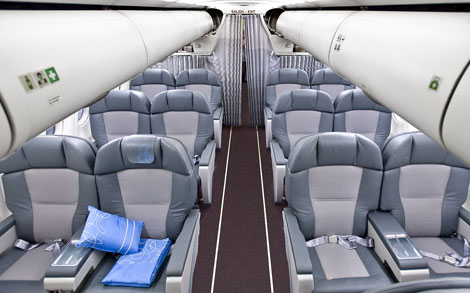
With the upgrade of Iberia's long haul business class on its A340 fleet to fully lie flat seats, Iberia may no longer be justifying its unfortunate reputation as a second rate European carrier. It has been lifting itself up to the standard of BA, which can only mean it can attract more transit traffic and more high yield traffic. Now it's time to uplift premium short haul as well.
Monday, February 01, 2010
Qantas to cut first class from all except A380s
Business Traveller has a report, unconfirmed, that Qantas is to remove first class from all aircraft except its A380 fleet. Given that first class only exists on A380s and 747s, this means that a significant number of routes will no longer offer first class.
Qantas has not yet announced when it will be ceasing to fly Boeing 747s. Given part of the 747 fleet is less than 10 years old, it is likely some will continue flying for the next 5-10 years (especially the 747-400ER, especially designed to fly fully laden MEL-LAX non stop).
QF 747s at present fly:
SYD-SIN-FRA
SYD-SFO
SYD-LAX-JFK
SYD-JNB
SYD-HKG
SYD-EZE
SYD-BKK-LHR
MEL-HKG-LHR
MEL-LAX
MEL-SIN-LHR
BNE-LAX
AKL-LAX
Some of these are on 744s without First Class, and some will naturally migrate fully onto A380s (LHR routes), some may migrate to A330s. However, beyond that it would appear that First Class into Australia is seen by Qantas as only justified on flight to the US and UK.
Qantas has not yet announced when it will be ceasing to fly Boeing 747s. Given part of the 747 fleet is less than 10 years old, it is likely some will continue flying for the next 5-10 years (especially the 747-400ER, especially designed to fly fully laden MEL-LAX non stop).
QF 747s at present fly:
SYD-SIN-FRA
SYD-SFO
SYD-LAX-JFK
SYD-JNB
SYD-HKG
SYD-EZE
SYD-BKK-LHR
MEL-HKG-LHR
MEL-LAX
MEL-SIN-LHR
BNE-LAX
AKL-LAX
Some of these are on 744s without First Class, and some will naturally migrate fully onto A380s (LHR routes), some may migrate to A330s. However, beyond that it would appear that First Class into Australia is seen by Qantas as only justified on flight to the US and UK.
Tuesday, January 26, 2010
Air New Zealand - images of new long haul
 How the Skycouch works (folding up from under the seat).
Premium Economy looks closer to some business class designs, although the recline is little different:
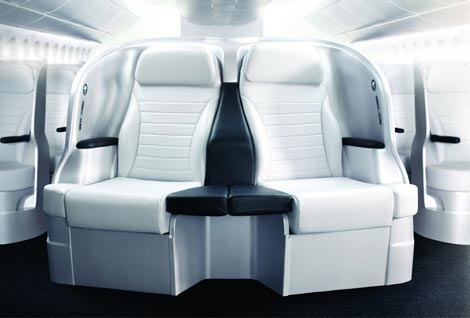
Business Premier looks little different:
Video summary of all products
Full Air New Zealand image set on flickr
Air New Zealand new long haul - compared with the competition?
In economy, skycouches can’t be beaten. For those not in skycouches it becomes a different story. For legroom and seat width, both Thai and Malaysian beat NZ with wider seats and marginally more legroom in economy. However, NZ easily beats Qantas and Cathay with two inches more legroom and comparable seat width. Emirates is probably on a par with NZ, which is frankly a slight step backwards.
In premium economy the only competitor is Qantas, and with this NZ has slipped ahead a couple of notches. With Cathay and Malaysian airlines both announcing premium economy products, it will be a segment of the market that will be moving ahead. Of course on both of the London runs, BA and Virgin compete for the LA and Hong Kong routes from London, but NZ beats both. Certainly the catering offer in premium economy remains the best. NZ’s main competition is probably cheap business class on the likes of Royal Brunei (although it is a three stop service to London!).
In business premier Singapore Airlines remains the standard to beat on flights to NZ. With such wide seats, privacy, large entertainment screens and seating parallel to the cabin, on its 77W flights to/from Auckland (not the 77E flights to Auckland and Christchurch), it has in my view, the superior hard product. However, NZ still soundly beats the rather narrow cheap version of the same seat concept on Cathay, whereas Malaysian, Korean and Thai still have sloping lie flat seats on flights to NZ. Qantas only has fully lie flat seats on the A380s, which are only some flights to London, although BA has long had fully lie flat seats on all long haul flights in business. Emirates has a mix of fully flat and recliner seats on routes from NZ to Europe, although A380s are consistently with fully flat products. However, NZ’s proposed food offering will easily excel all of them.
For catering, NZ will clearly be the market leader in its part of the world. Only a few airlines, like Austrian, go for cooking food fresh, it isn’t cheap, but it makes a major point of difference from other airlines. It will be a significant reason to use NZ over other carriers in the front cabins.
For entertainment, it will be another step forward, with larger entertainment screens in at least economy and premium economy, and an improved system. It will be up with the current best, although it is unclear if there will be USB ports to charge MP3 players and laptop power at every seat.
Still, it keeps NZ ahead of the game, and gives some further potential to move forward when the 787s arrive.
In premium economy the only competitor is Qantas, and with this NZ has slipped ahead a couple of notches. With Cathay and Malaysian airlines both announcing premium economy products, it will be a segment of the market that will be moving ahead. Of course on both of the London runs, BA and Virgin compete for the LA and Hong Kong routes from London, but NZ beats both. Certainly the catering offer in premium economy remains the best. NZ’s main competition is probably cheap business class on the likes of Royal Brunei (although it is a three stop service to London!).
In business premier Singapore Airlines remains the standard to beat on flights to NZ. With such wide seats, privacy, large entertainment screens and seating parallel to the cabin, on its 77W flights to/from Auckland (not the 77E flights to Auckland and Christchurch), it has in my view, the superior hard product. However, NZ still soundly beats the rather narrow cheap version of the same seat concept on Cathay, whereas Malaysian, Korean and Thai still have sloping lie flat seats on flights to NZ. Qantas only has fully lie flat seats on the A380s, which are only some flights to London, although BA has long had fully lie flat seats on all long haul flights in business. Emirates has a mix of fully flat and recliner seats on routes from NZ to Europe, although A380s are consistently with fully flat products. However, NZ’s proposed food offering will easily excel all of them.
For catering, NZ will clearly be the market leader in its part of the world. Only a few airlines, like Austrian, go for cooking food fresh, it isn’t cheap, but it makes a major point of difference from other airlines. It will be a significant reason to use NZ over other carriers in the front cabins.
For entertainment, it will be another step forward, with larger entertainment screens in at least economy and premium economy, and an improved system. It will be up with the current best, although it is unclear if there will be USB ports to charge MP3 players and laptop power at every seat.
Still, it keeps NZ ahead of the game, and gives some further potential to move forward when the 787s arrive.
Air New Zealand new long haul - soft product and entertainment
The news here is primarily in catering.
New ovens allowing food to be freshly cooked, with indications this can include steak, bacon, eggs and pizza. Business Premier customers will be able to order on demand food the way they want it. Premium Economy looks like having a similar option. Undoubtedly compared to reheating food, this is a major step up from the status quo. Although eating on demand in business class is increasingly available, it is typically seen in first class.
No doubt economy class food will still be reheated, as there would not be enough time to do anything else. However, being able to order snacks and drinks on demand will be a challenge for the cabin crew. Crew will face the challenge of people ordering drinks more easily than at present (easier to select on a screen than to push a call button and ask for service), but also cooking rather than heating meals.
A new entertainment system will be installed, using the Panasonic system now installed on 767s and A320s. Screens in economy will be 2” larger than at present, and it will be touchscreen. Without hard shell seats in economy, this could be a nuisance particularly with children behind a passenger. However, one innovation will be the use of the system to indicate when meals are to be served, what is available and when lights will be turned down. This additional information for travelers will be a nice touch. It also looks like all seats have power points for laptops and MP3 players.
Bathrooms have been redesigned, hopefully premium bathrooms will have more room and it is interesting to see NZ following Lufthansa in having opening windows in bathrooms.
So overall some useful tweaks, although I'd be interested to know the size of entertainment screens in premium economy and business premier. The latter now has screens smaller than the latest products by Singapore and Emirates.
Catering is the most exciting change though. It is an area Air NZ has decided differentiates itself clearly from the competition, and is an opportunity to be innovative and get a reputation that premium travellers will appreciate.
Verdict: Potential for NZ to be world leader in business class catering, it already is in premium economy (serving business class food). In Economy it's already good by industry standards. Entertainment system largely a tweak, but the introduction of inflight information through the system regarding food, lighting and the rest is a good step forward. Gets an A.
New ovens allowing food to be freshly cooked, with indications this can include steak, bacon, eggs and pizza. Business Premier customers will be able to order on demand food the way they want it. Premium Economy looks like having a similar option. Undoubtedly compared to reheating food, this is a major step up from the status quo. Although eating on demand in business class is increasingly available, it is typically seen in first class.
No doubt economy class food will still be reheated, as there would not be enough time to do anything else. However, being able to order snacks and drinks on demand will be a challenge for the cabin crew. Crew will face the challenge of people ordering drinks more easily than at present (easier to select on a screen than to push a call button and ask for service), but also cooking rather than heating meals.
A new entertainment system will be installed, using the Panasonic system now installed on 767s and A320s. Screens in economy will be 2” larger than at present, and it will be touchscreen. Without hard shell seats in economy, this could be a nuisance particularly with children behind a passenger. However, one innovation will be the use of the system to indicate when meals are to be served, what is available and when lights will be turned down. This additional information for travelers will be a nice touch. It also looks like all seats have power points for laptops and MP3 players.
Bathrooms have been redesigned, hopefully premium bathrooms will have more room and it is interesting to see NZ following Lufthansa in having opening windows in bathrooms.
So overall some useful tweaks, although I'd be interested to know the size of entertainment screens in premium economy and business premier. The latter now has screens smaller than the latest products by Singapore and Emirates.
Catering is the most exciting change though. It is an area Air NZ has decided differentiates itself clearly from the competition, and is an opportunity to be innovative and get a reputation that premium travellers will appreciate.
Verdict: Potential for NZ to be world leader in business class catering, it already is in premium economy (serving business class food). In Economy it's already good by industry standards. Entertainment system largely a tweak, but the introduction of inflight information through the system regarding food, lighting and the rest is a good step forward. Gets an A.
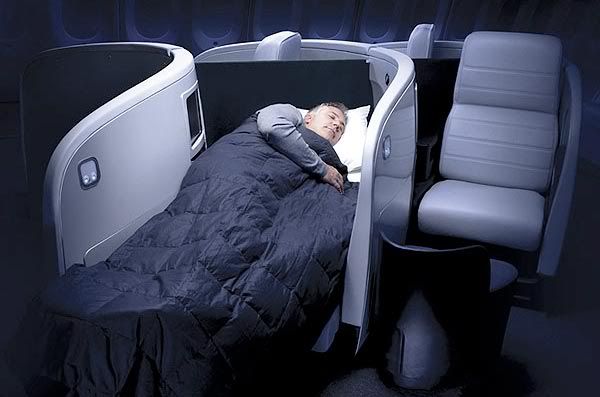
Air New Zealand new longhaul - Business Premier
It’s fair to say there is nothing revolutionary about what NZ is planning here. It is essentially the same herringbone configuration, just with some tweaks of the seats. The big leap forward is the catering (described elsewhere).

One of the main criticisms of the NZ (and VS, and to be fair CX and AC) product is the lack of storage space and the inability of passengers to look out of the windows. That hasn’t been addressed, which is presumably because to do so would mean less seats. However, NZ has had substantial success with this product as it is, and it still beats most of its competitors. The story hear is evolution not revolution.
Verdict: An already good product significantly improved with catering upgraded. Not the best in its class, but certainly in the top five. A "B" for the improvement, and it's all about catering.

One of the main criticisms of the NZ (and VS, and to be fair CX and AC) product is the lack of storage space and the inability of passengers to look out of the windows. That hasn’t been addressed, which is presumably because to do so would mean less seats. However, NZ has had substantial success with this product as it is, and it still beats most of its competitors. The story hear is evolution not revolution.
Verdict: An already good product significantly improved with catering upgraded. Not the best in its class, but certainly in the top five. A "B" for the improvement, and it's all about catering.
Subscribe to:
Posts (Atom)